
Industry Coverage

Cadence Maestro puts domain-trained AI agents to work for chip design
Artificial intelligence has been part of semiconductor design for years, helping engineers optimize chip architectures for performance, power efficiency, silicon area and faster development. More recently, the industry has begun integrating large language models and AI agents into established electronic design automation (EDA) workflows. Now Cadence Design Systems is taking that approach further with its Maestro AI Model Portfolio, a collection of domain-specialized models designed to work with the company’s engineering software and AI Super Agents.
Maestro combines specialized model training, reinforcement learning and established EDA tools to improve how AI agents execute engineering tasks and evaluate results. Cadence claims better design outcomes with greater token efficiency versus general-purpose foundation models. While initially focused on chip and electronic system design, I also see broader implications for enterprise AI economics, proprietary data protection and deployment across complex engineering and business applications.

Intel's Classiq Acquisition Sharpens And Commercializes Its Quantum Computing Strategy
Intel has spent at least a decade developing silicon-based quantum computing technology, largely outside of the commercial spotlight. Now, its planned acquisition of quantum software tools developer Classiq signals a shift in strategy, as the chipmaker looks to turn years of research into a commercial business. The acquisition, announced October 26, brings Classiq's quantum algorithm development and synthesis platform together with Intel's silicon spin-qubit technology, cryogenic control electronics, and existing Quantum SDK.

Microsoft Surface Laptop Ultra: NVIDIA RTX Spark means business
NVIDIA officially entered the Windows PC race this week, and its arrival brings a formidable new competitor to the premium AI PC market. With its RTX Spark platform, NVIDIA is bringing its Grace Arm CPU architecture, Blackwell GPU technology and extensive software ecosystem together in a new generation of Windows laptops. Microsoft’s Surface Laptop Ultra is among the first systems to showcase this collaboration, leveraging NVIDIA’s tech and putting it squarely in competition with Intel, AMD, Qualcomm and even Apple for high-performance local AI and creation-optimized laptops.
For Microsoft, the partnership expands the capabilities of Windows on Arm considerably, particularly for local AI development, content creation and other demanding professional workloads. Starting at $2,599.99, Surface Laptop Ultra is clearly a premium offering, but its combination of processing horsepower, large, unified memory capacity, and premium industrial design gives it an interesting position in the market.

AMD Unveils Ross Agentic AI To Accelerate Embedded Engineering
AMD is hoping to streamline and redefine how embedded systems are designed, debugged, and deployed with the introduction of its new AMD Ross AI assistant, which is essentially a new abstraction layer that spans hardware, software, and system-level engineering. Ross may represent more than a common product launch, however, and signals AMD’s intent to reshape the workflow and economics of embedded product development, accelerate adoption of its adaptive and x86 platforms, and deepen customer connections for those products through an intelligent, AI-integrated, accelerated workflow.

NVIDIA Tackles AI Safety Concerns With New Tools To Contain Rogue Agents
The debate around AI safety has grown considerably louder as models have become more capable and AI agents are given more autonomy for recursive self-improvement, accessing networks and data, and taking actions on behalf of users. At the extreme end of that debate are warnings that advanced AI could eventually become difficult or even impossible for humans to control, ultimately culminating in an existential threat.
NVIDIA CEO Jensen Huang has pushed back on some of those AI apocalypse scenarios, arguing that keeping AI under control ultimately comes down to an engineering problem that NVIDIA is now throwing serious resources behind as well.

Axelera Europa targets enterprise data centers with far more efficient AI
Netherlands-based AI accelerator start-up Axelera is targeting a major challenge facing enterprise AI deployments with its new Europa platform. Europa is designed to deliver more AI inference performance than competing solutions within the constrained power and cooling budgets of enterprise data centers.
The power demands of AI infrastructure have become one of the primary limiting factors of current data center buildouts. Hyperscalers can secure dedicated generation capacity, negotiate directly with utilities and, in some cases, pursue entirely new power sources to support massive AI clusters. Many corporate data centers, however, don’t have these luxuries. Axelera’s new Europa AI Processing Unit (AIPU) takes the company’s power-efficient approach to edge and physical AI and scales it to enterprise server-class workloads.
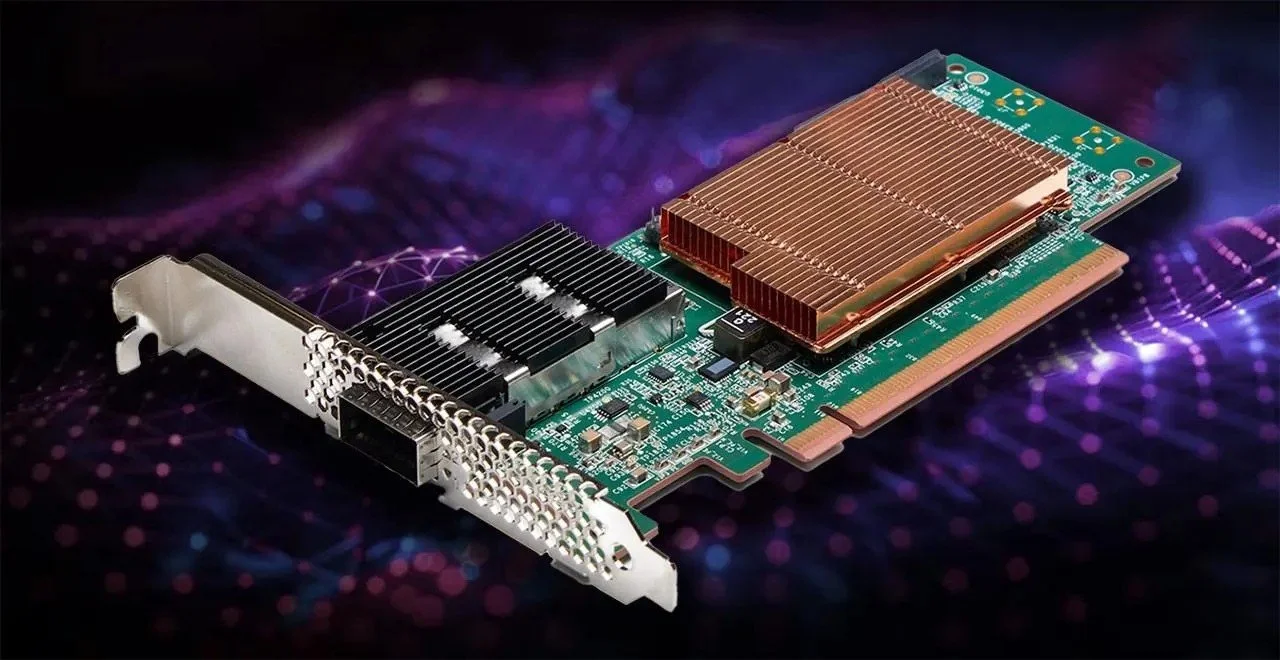
Cornelis Unveils Active Compute Fabric To Maximize AI Rack Utilization
Much of the discussion surrounding AI infrastructure lately has focused on compute and power. Faster GPUs, denser accelerator clusters, bespoke, specialized silicon, and the power required to run it all have dominated market chatter as of late. But anyone who understands the complexities of modern AI data centers knows that compute is not the sole factor that determines performance and efficiency. A significant bottleneck, that often erodes ROI and leaves multimillion dollar racks underutilized, is the network fabric and Cornelis’ new Active Compute Fabric technology is designed to address this limitation in novel ways.

Qualcomm’s next Snapdragon mobile chip comes into focus with on-device AI
Qualcomm is taking an unusual approach to the launch of its next-generation premium Snapdragon mobile platform this year. Instead of holding everything for its annual Snapdragon Summit in Maui happening later this month, the company has been methodically disclosing the architecture that will power the next wave of flagship Android phones over the past couple of weeks.
First, the company disclosed its new Oryon CPU architecture, followed by a major overhaul of its Adreno GPU. Today, Qualcomm is detailing the next-generation Hexagon NPU that will serve as the platform’s primary AI engine.
Taken together, the disclosures give us a pretty good picture of where Qualcomm is going before we even know the chip’s official name.

Distributed Personal AI Is The Future And Nvidia PAIR Proves It
At IFA, currently underway in Berlin, Nvidia made a multitude of announcements regarding the availability of RTX Spark-based systems (which will arrive next month) and AI model and software advancements to facilitate the installation and deployment of local AI agents. One of the more interesting announcements, however, at least to me, was Nvidia PAIR—an acronym for Personal AI Router. Nvidia PAIR is a software-defined router that can intelligently distribute AI inference workloads across multiple computers on a local network. That may sound complicated, but it’s really not, and I believe it provides a glimpse of where personal AI workloads are headed for a large swathe of the general population.

Hot Chips 2026: Efficient Data Movement Is Shaping The AI Race
Hot Chips has always been one of the industry's best venues for getting beneath product-level specifications and into the architectures driving the next generation of computing. This year's conference so far has highlighted a broader shift in AI-accelerated architectures, where memory capacity and bandwidth, data movement, power, interconnects and rack-level integration are becoming critical design constraints alongside compute performance.
NVIDIA, AMD and Intel detailed new CPU, GPU and system architectures at the Stanford University campus venue, while Micron discussed how memory architectures need to evolve to keep pace with AI. Meanwhile, recent Qualcomm disclosures around High Bandwidth Compute (HBC) and its new Oryon CPU with FlexCache offer another perspective on many of the same challenges.

Google Pixel 11 Pro XL: A smarter phone for getting things done
The new Google Pixel 11 Pro XL doesn’t dramatically reinvent the company’s flagship smartphone formula. From a hardware perspective, this year’s model represents an incremental update. But after spending time with Google’s latest full-featured Pixel, I’ve found that some of its most meaningful improvements for business users aren’t necessarily the things that stand out on a spec sheet or benchmark chart.
Starting at $1,299 with 256GB of storage, the Pixel 11 Pro XL features a 6.8-in. Super Actua LTPO OLED display, Google’s new Tensor G6 processor, a 5115mAh battery and an updated triple-camera system. Google also pledges seven years of operating system, Android security and Pixel Drop updates.
The hardware is very good, but Google’s deeper integration of Gemini with Android and other thoughtful software features are what make this device more interesting.

Intel's Turnaround: Manufacturing, Foundry And Packaging Lead The Way
For much of the past several years, Intel has been defined more by what went wrong than by what the company accomplished. Manufacturing delays, product roadmap slips and growing competitive pressure from AMD and NVIDIA reshaped both the company's reputation and investor sentiment. The prevailing narrative became almost self-perpetuating: Intel was continually rebuilding, while everyone else was executing.
I don't believe that narrative accurately reflects where Intel stands today.
Of course, Intel's turnaround isn't complete. The company still faces significant competitive challenges, particularly in AI infrastructure, and Intel Foundry must continue proving itself with external customers at scale. However, after following Intel's engineering roadmap and manufacturing strategy closely over the past several years, I believe we've reached an inflection point where tangible improvements in manufacturing, product execution and long-term strategy are beginning to strengthen the company's competitive position. This is no longer a turnaround built primarily on promises. It's increasingly supported by measurable progress.

AMD raises the AI stakes with Helios, Venice and robotics
AMD executives took to the stage at its Advancing AI 2026 event in San Francisco today to detail the company’s next generation of AI infrastructure solutions, from Instinct MI455X AI accelerator GPUs and 6th Gen EPYC “Venice” CPUs, to Pensando networking, ROCm.AI software and its Helios rack-scale platform that ties it all together.
AMD has been working towards rack-scale AI system solutions for years. Its ZT Systems acquisition last year added valuable engineering talent and intellectual property that is now finally bearing the real fruits. Its Helios AI platform is a major platform evolution for AMD, with shipments scheduled to begin in the second half of this year (which is here and now).

Why Nvidia Built Its Vera CPU For The Agentic AI Era
Nvidia has expanded well beyond GPUs over the years, building an increasingly more diverse and comprehensive AI platform spanning networking, DPUs, high-speed interconnects, rack and pod-scale systems and software. With its upcoming Vera CPU, the company is adding another strategic product, a custom Arm-based server processor featuring its own custom “Olympus” microarchitecture, designed specifically for emerging agentic AI workloads.

Axelera AI Launches Wingman To Simplify Edge AI Application Development
One of the recurring themes across the AI industry this year has been making powerful hardware easier to use and develop on. AI accelerators continue to improve in performance and efficiency, but getting applications from concept to deployment can still require significant engineering effort. As edge AI adoption expands across industrial automation, robotics, retail analytics, healthcare and physical security, developer productivity is becoming an increasingly important part of the conversation.
That is the backdrop for Axelera AI's Voyager Wingman announcement. Voyager Wingman is a new AI-powered assistant built specifically for developers targeting the company's Metis edge AI accelerators through Axelera AI’s Voyager SDK.

Cadence Expands AI Agents With AuraStack For PCB And Advanced Chip Packaging
As systems and AI infrastructure get more complex, the engineering challenges required to design and bring them to market extend well beyond silicon. Printed circuit boards, advanced packaging, power delivery, thermal management, materials and mechanical structures are all critical to system performance and reliability as well, and co-optimization of all aspects of a design is effectively a requirement today.
Cadence Design Systems believes the next level of AI-assisted engineering resides at the system level, and to that end, the company just announced its new AuraStack AI Super Agent, an agentic AI platform for PCB and advanced chip packaging.

Qualcomm Investor Day Reveals Full-Stack AI Platform Spanning Data Center To Edge
Qualcomm's Investor Day in Manhattan last week marked what CEO Cristiano Amon described as the company's next major transformation—expanding from a leader in connected edge computing into a company building AI infrastructure that spans everything from ultra-low-power IoT devices to hyperscale data centers.
That's a broad, bold vision, but unlike many AI narratives circulating across the semiconductor industry, Qualcomm backed it with a coherent technology roadmap, meaningful customer engagement and measurable financial targets.

Intel's Arc G3 Extreme Signals A Serious New Competitor For Gaming Handhelds
The handheld gaming market has evolved from a niche category into one of the most competitive segments in PC hardware. For years, AMD has powered many of the devices that defined the category, but Intel's Arc G3 Extreme marks something different. It represents the company's first truly dedicated handheld gaming platform and demonstrates just how much progress Intel has made in graphics, software and power management.

Is The MacBook Neo A Real Threat To The PC Ecosystem?
The MacBook Neo's launch has sparked much debate, with some arguing that PC manufacturers shouldn't copy Apple. Despite the Neo's praised $599 starting price, it achieves this by using older iPhone-class silicon, limited RAM, and basic connectivity. While its premium aluminum chassis stands out, many affordable Windows laptops offer superior specifications, including newer processors, more memory, and better connectivity, often at similar or lower price points.

Synopsys Multiphysics Integration Signals A Broader Shift In Semiconductor Design
By integrating Ansys simulation technologies more deeply into its core EDA workflows, Synopsys is making a strategic bet that future gains in semiconductor performance and efficiency will come less from optimizing individual components and more from understanding how increasingly complex systems behave as a whole. Simultaneous co-optimization will be key.